Hope Gets a Studio: Inside the Obama Presidential Center's Vision for Community Storytelling
Podcasting and the Obama Presidential Center are betting that ordinary people, given the right space and the right tools, will have something worth saying, and that someone else, somewhere, needs to hear it.
The Obama Foundation's mission is to inspire, empower, and connect people to change their world. Podcasting, when it's working for the better good, does exactly that. It gives individuals and communities a way to document their own history, reach audiences they could never have accessed through traditional media, and participate in public conversation on their own terms. In 2026, 619 million people worldwide listened to podcasts. Ninety one percent of shows are independently produced—not by networks or by corporations— but by people who decided their story was worth telling. That number keeps growing because the barrier to entry keeps dropping, and because people are hungry for voices that sound like their own communities, and stories not often heard in traditional media.
The Obama Presidential Center opened on June 19, 2026 (Juneteenth), on 19.3 acres of historic Jackson Park on Chicago's South Side. It was designed with a state-of-the-art recording studio at its heart, alongside a public library branch, a storytelling booth inside the Museum, 28 pieces of commissioned art, open plazas, and a campus built to bring people together, whether they come for the art, the basketball court, the garden, or the history. I was invited for an early visit: I walked all 19.3 acres, recorded inside the Media Suite, and joined an exclusive roundtable conversation with President Obama about why civic spaces and creative tools belong in the same building.
The short answer: they always have.
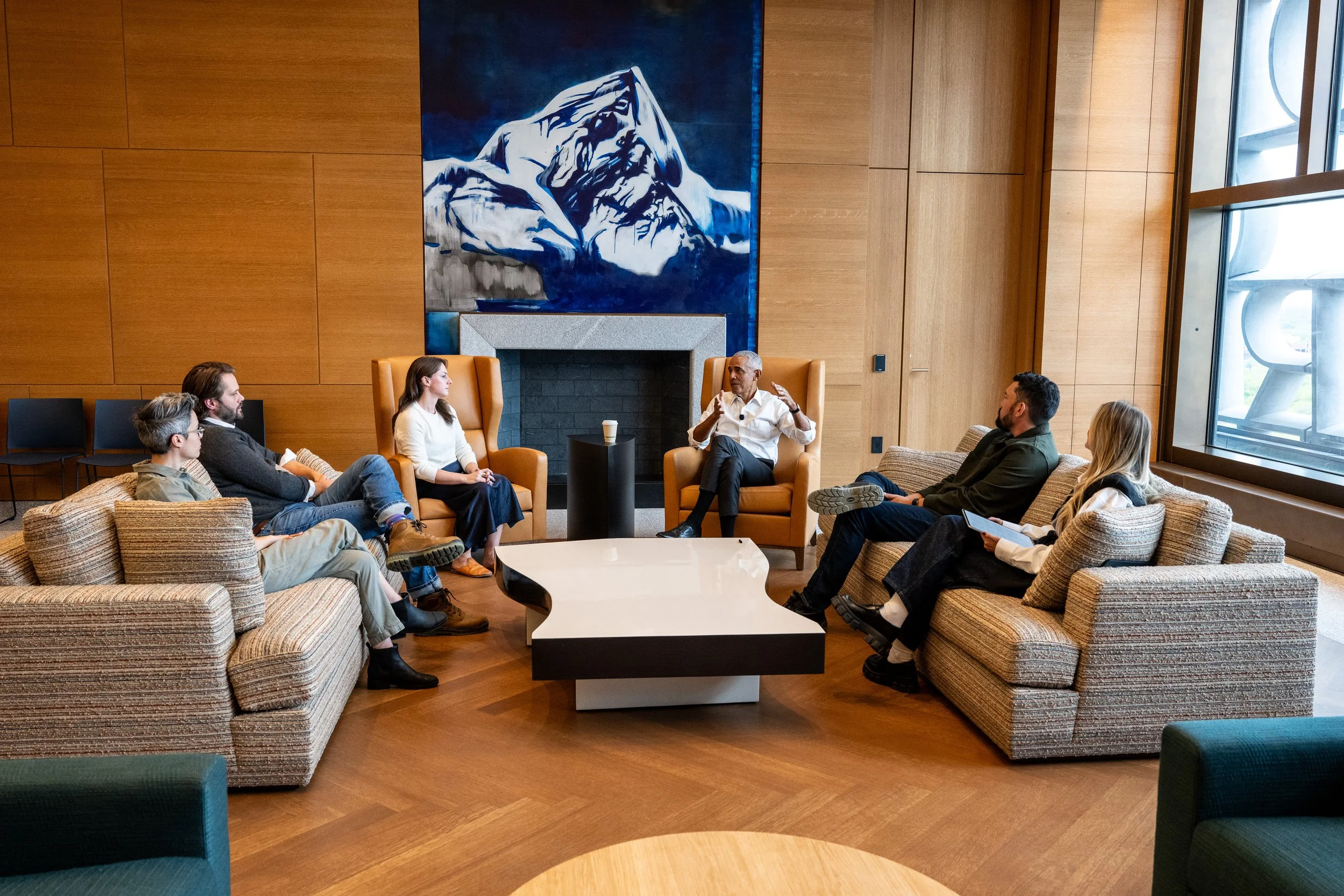
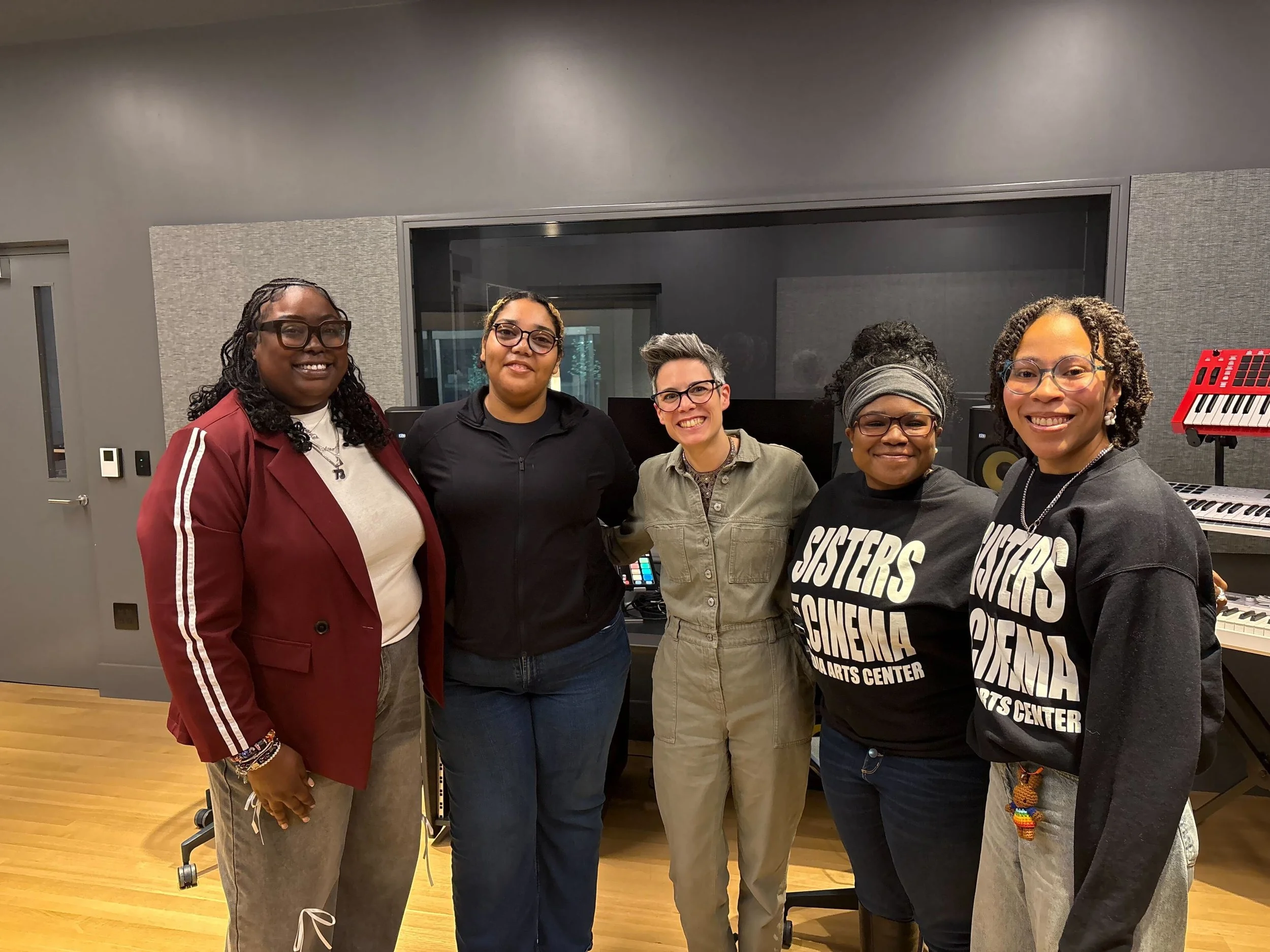
President Obama discussing his expectations for the use of the Obama Presidential Center. Credit: Obama Foundation
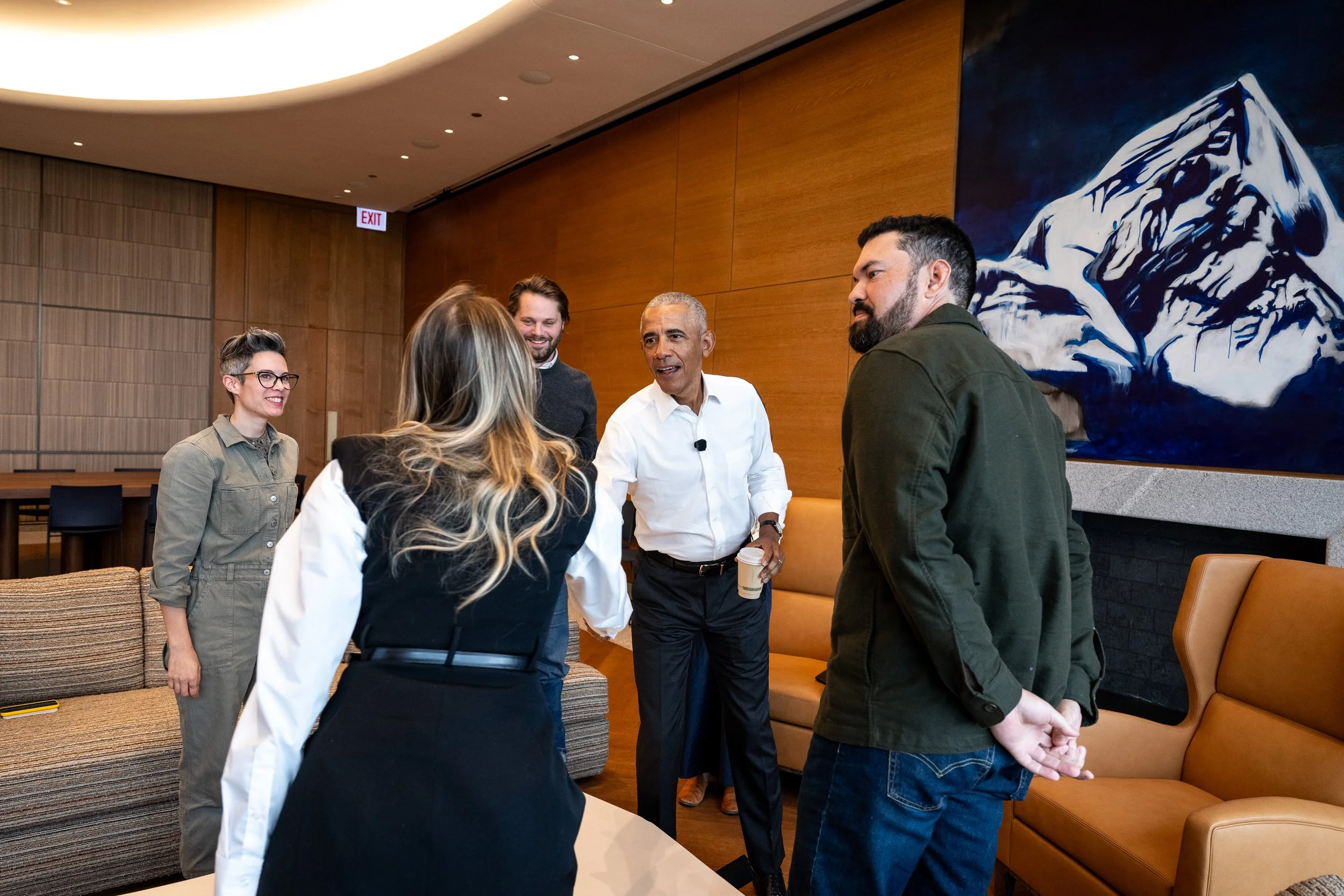
Meeting the President. Credit: Obama Foundation
A President Who Has Always Known the Power of the Mic
Long before a recording studio was included in the blueprints for this campus, President Barack Obama was already making the case for audio as a tool for civic life.
In 2008, he ran the first genuinely digital presidential campaign in American history using Facebook, YouTube, Twitter, and podcasting to reach people directly, bypassing traditional media gatekeepers. Strategists called him the first "Internet president." What he was really doing was recognizing that the fastest way to earn someone's trust is to talk to them like a human being, in a format they actually use.
Then, in June 2015, June 19, 2015, Juneteenth, he became the first sitting president to appear on a podcast, driving to Marc Maron's Los Angeles garage to record an episode of WTF. The episode gained 300,000 new listeners almost overnight and is widely credited as the moment the wider world stopped questioning whether podcasting was a legitimate medium.
After leaving office, during the height of the pandemic, he co-hosted Renegades: Born in the USA with Bruce Springsteen, released on Spotify in 2021, a podcast exploring race, masculinity, friendship, and the future of America.
So when the Obama Presidential Center was designed with a state-of-the-art recording studio at its heart, it wasn't a trend-chasing add-on, it was the next logical step in his legacy.
What the Space Actually Is
The Center is not a traditional presidential library, and that distinction matters. It's a living campus: museum, community hub, civic space, green space, and the first fully digital presidential library in American history. The Obama Foundation worked with the National Archives to digitize the entire record of the presidency, making it more accessible than any paper archive could be.
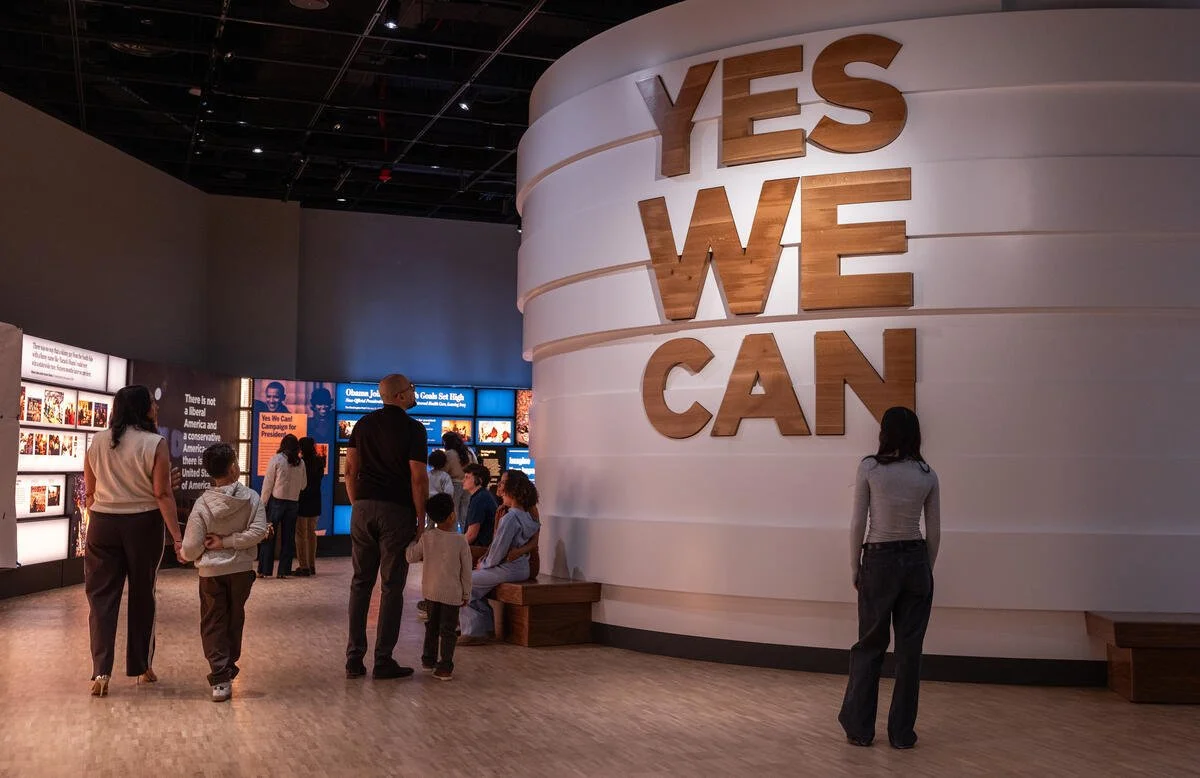
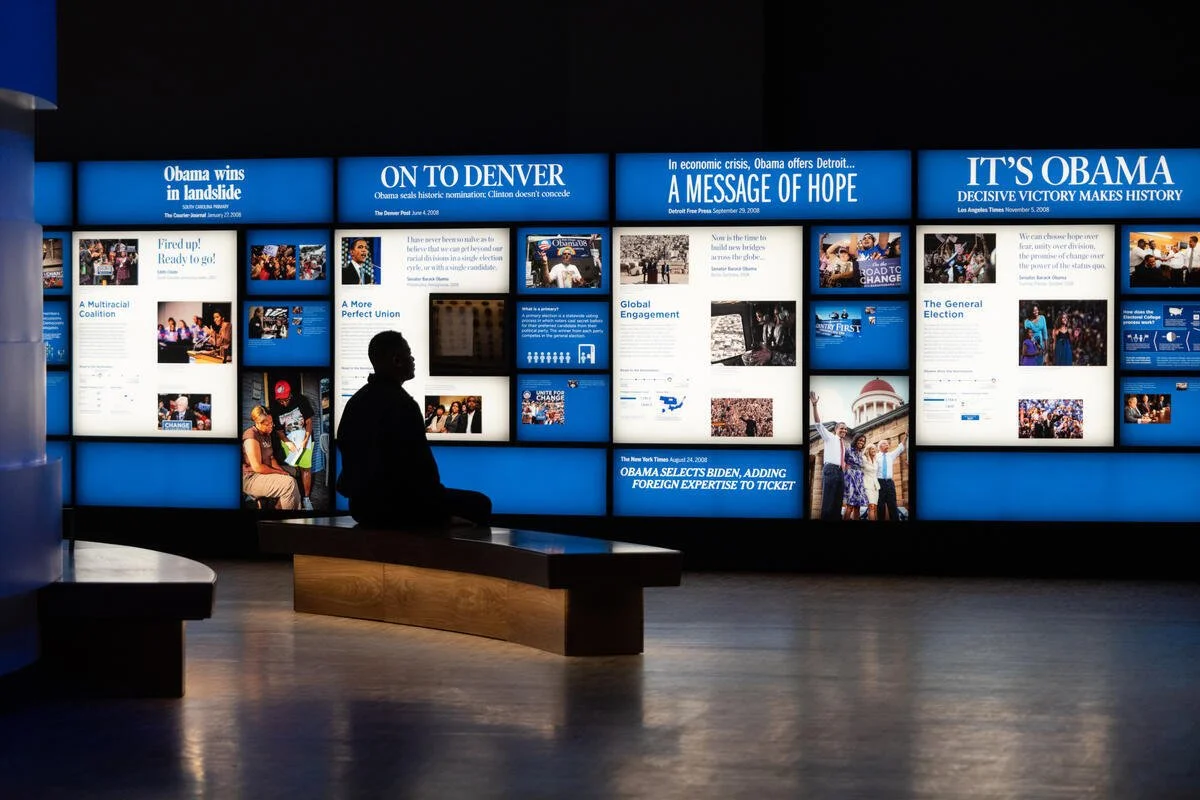
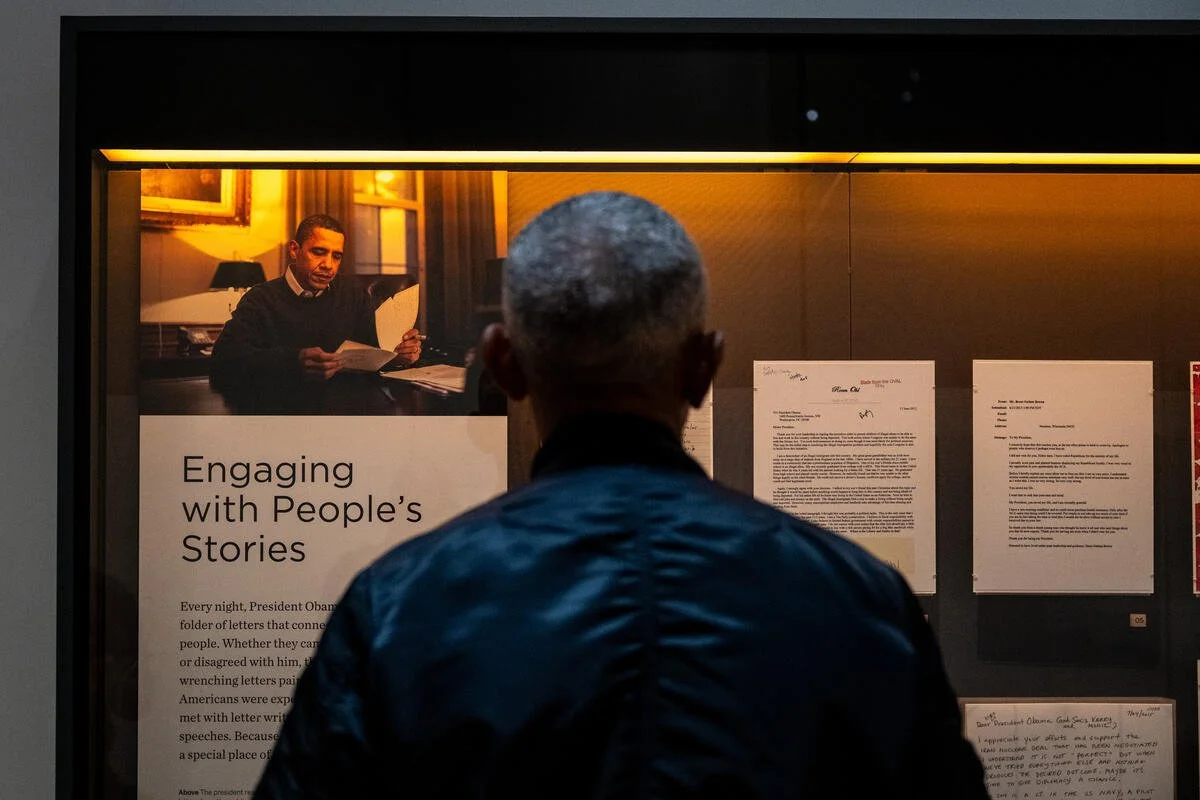
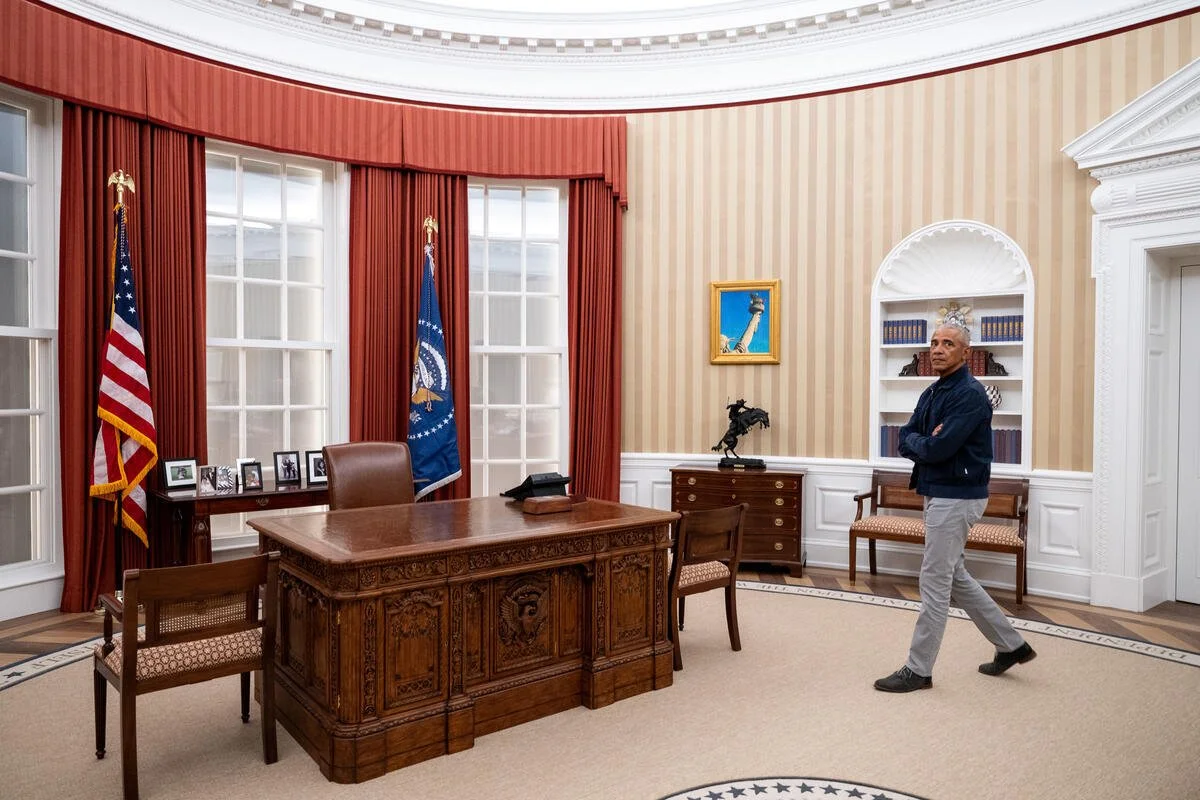
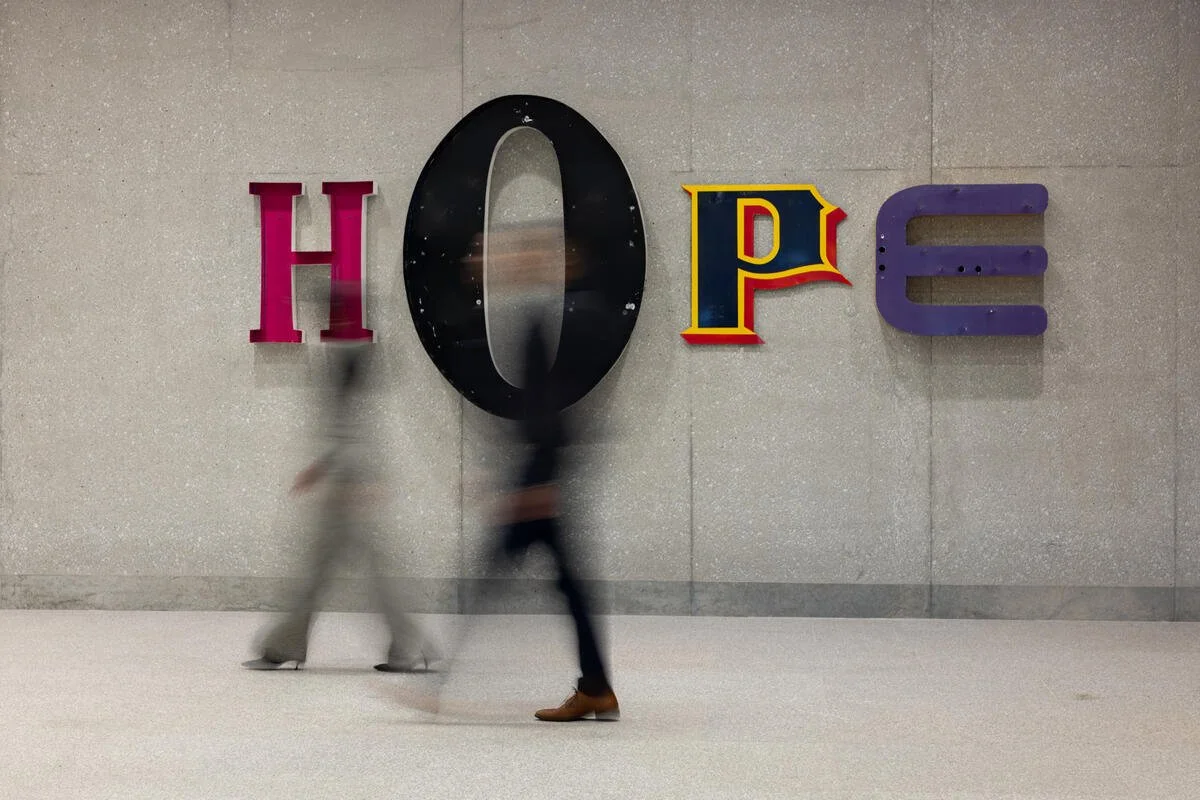
The 19.3-acre campus holds more than most people realize before they arrive. The Museum is a four-floor journey through American democracy, the movements that shaped it, and the Obama presidency, ending not with a monument to the Obamas but with a floor dedicated to "We The People." Inside you'll find a full-scale Oval Office replica, Michelle Obama's iconic gowns, grassroots memorabilia donated by supporters from around the world, and the Power of Words installation, an impressive 88-foot digital piece cycling through speeches, songs, art, and poetry.
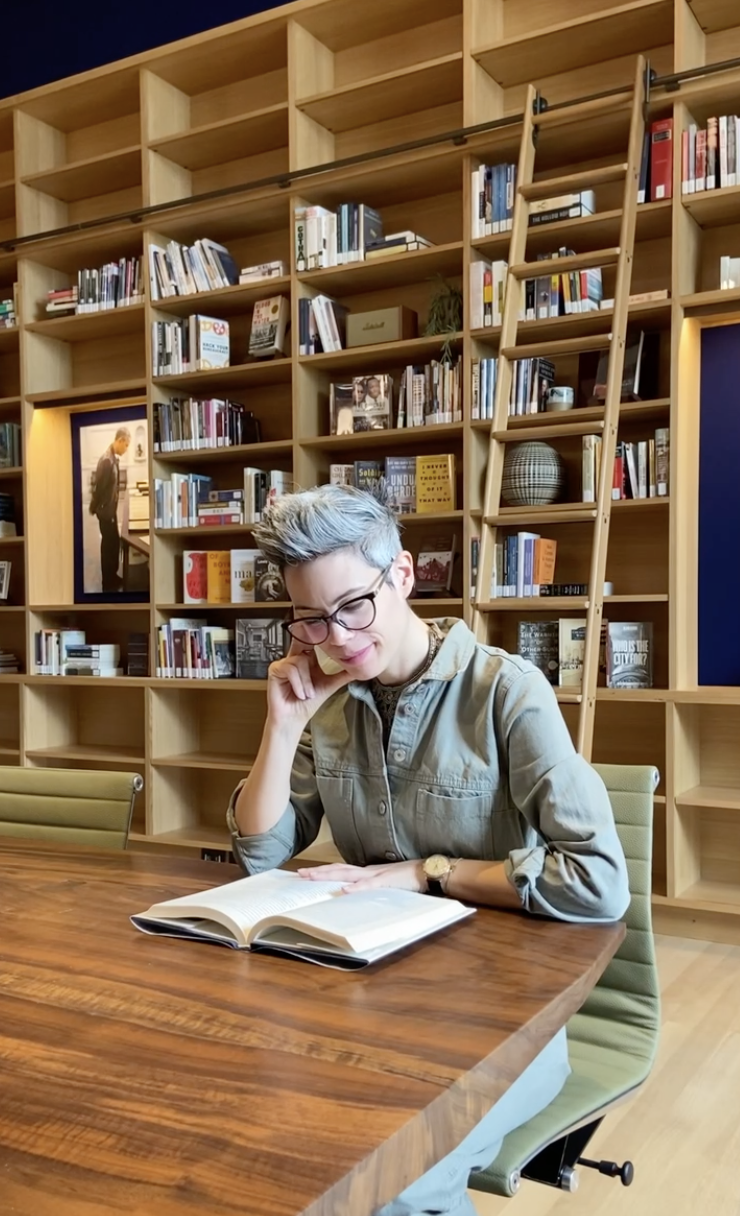
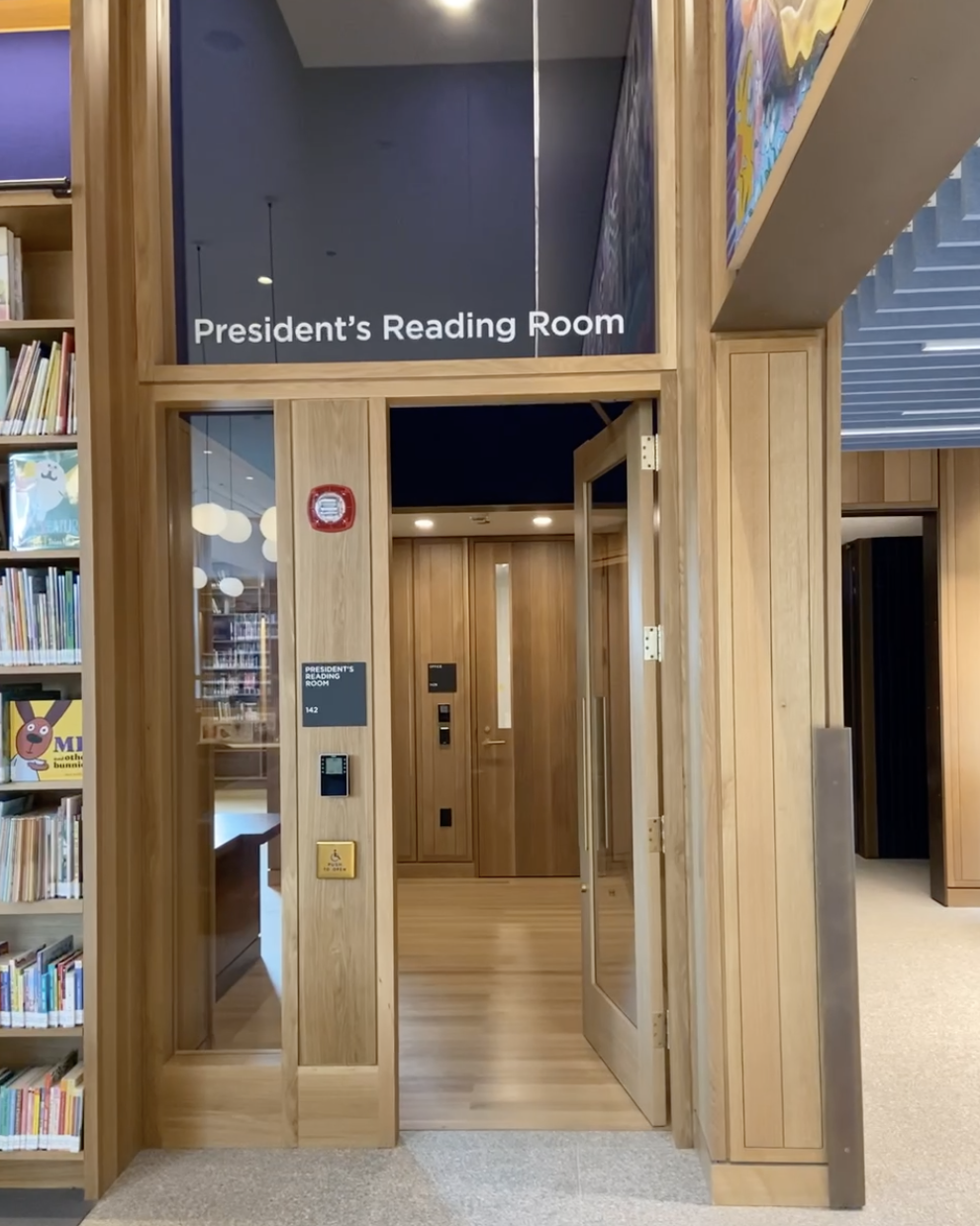
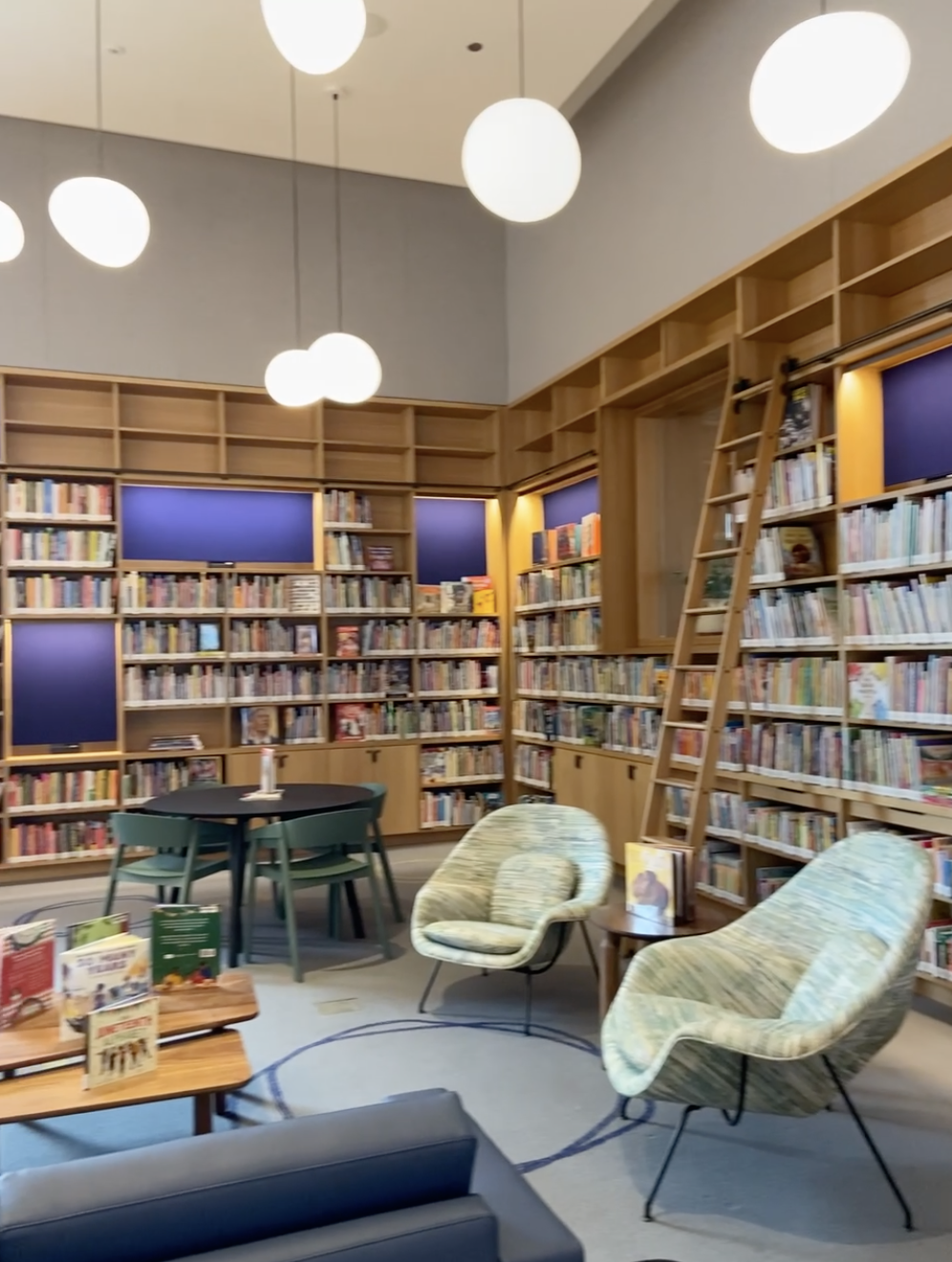
But the Museum is only part of it. The Forum building, which holds the recording studio, an auditorium, the Democracy in Action Lab, a restaurant, and the Hadiya Pendleton Atrium (named for the Chicago teenager killed by gun violence days after performing at Obama's second inauguration) is where I felt the civic heartbeat of the place most clearly. The new (and quiet) Chicago Public Library branch sits nearby, with its interactive media area and the Presidential Reading Room.
There's also the Eleanor Roosevelt Fruit and Vegetable Garden, a working garden with raised garden beds at varying heights for accessibility, a teaching kitchen, and a design that came directly from community input. I explored the 3.5 miles of new walking paths and instantly felt inspired by native plants, and the openness of Lake Michigan.
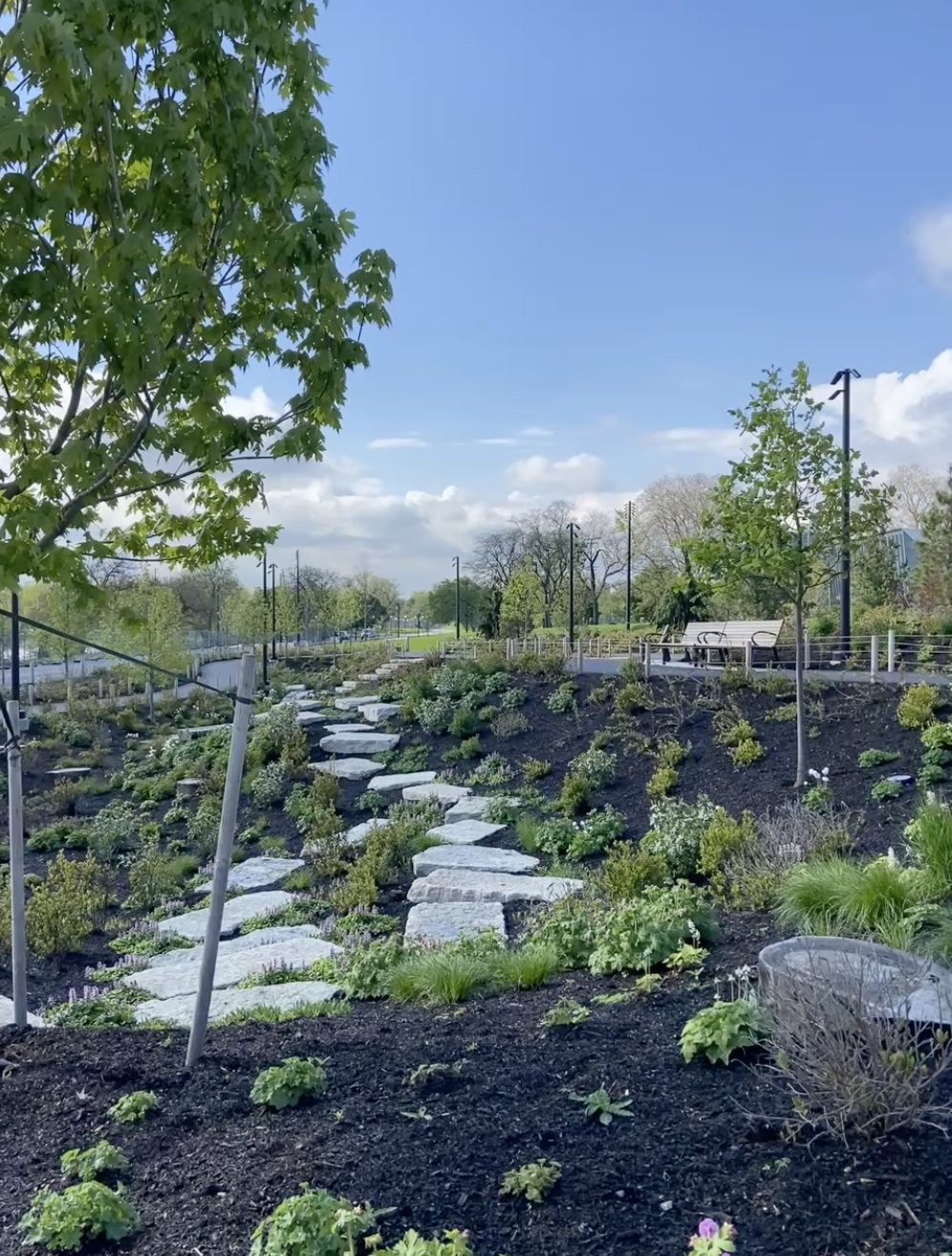
Over 3 miles of trails to enjoy.
Everything outside the Museum is open to anyone, with over 80% of the campus being free.
Why This Matters for Podcasters Specifically
In 2026, an estimated 619 million people worldwide listen to podcasts. Americans spend 773 million hours per week with the medium, a 355% increase over the past decade. Hispanic and Black audiences are among the fastest-growing listener groups. Ninety-one percent of podcasts are independently produced, not by networks or corporations, but by people who have something to say and a dream to inspire change.
Podcasting is one of the most genuinely democratic communication tools we have. You don't need a broadcast license, a network deal, or a big production budget to reach someone on the other side of the world with a story that matters. What you need is access to a space, a microphone, and the belief that your community's story is worth telling.
That's exactly what President Obama said when I asked him how he hopes people use the studio:
“[10:55] What I love about podcasting is it’s got a low barrier to entry. And that is revolutionary. The notion that you’ve got a story to tell, you get a microphone, and you record that story. And if it’s a good enough story, you might have somebody in Bangladesh or Munich listening to that story - a very specific story about a very local event that achieves some universal meaning to people and gets them to see something they didn’t see before. That’s not just the source of great art, it’s the source of community, the source of social trust, and it’s the source of, ultimately, democracy, and social cohesion. So we wanted to make sure that we had facilities here where people could tell stories.”
The Obama Foundation's mission, to inspire, empower, and connect people to change their world, is almost word-for-word what podcasting does when it's working for the greater good. The studio isn't a bonus feature but a physical vehicle to change Chicago.
The Ideas That Came to Me While Walking the Campus
Here's what I kept thinking as I moved through the space: the recording opportunities here extend far beyond the Media Suite.
The Chicago Public Library branch on campus holds access to the neighborhood's history, its archives, its community knowledge. Bring an elder in. Sit them down in the library or walk them into the studio and capture what they know about this South Side: its jazz lineages, its organizing history, its cultural contributions that shaped American life in ways that still haven't been fully documented. Chicago has always been a city where extraordinary things happen that don't always make it onto the national record.
The storytelling booth at the end of the Museum exhibits is there for exactly this. After four floors of American history and learning about President Obama’s legacy, visitors are invited to record their own story. Not just as a fun gimmick, but as a way of leaving their footprint. That booth, the Media Suite, and the library together form something like a community media pipeline that didn't exist before on the South Side.
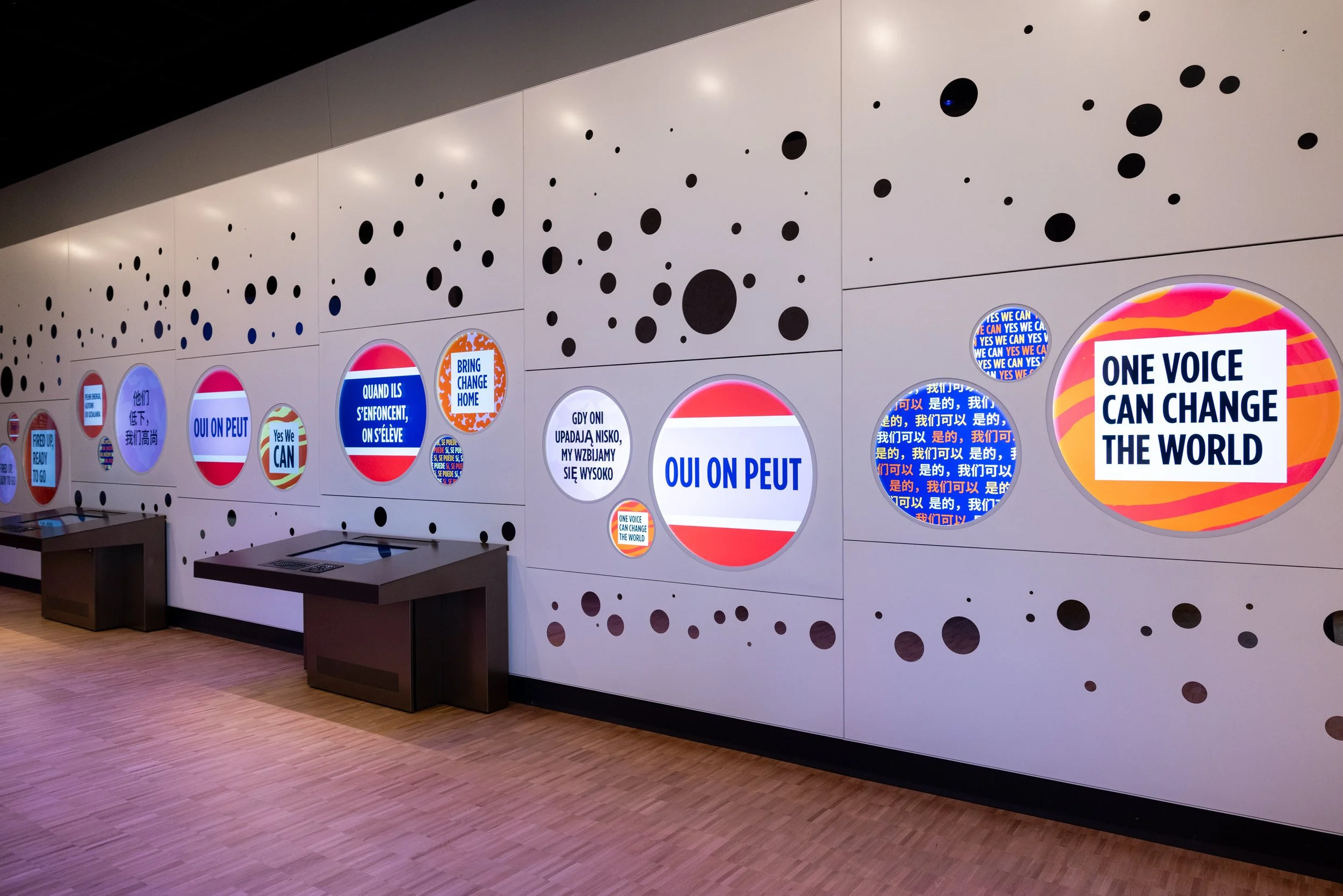
Obama Presidential Museum wall. Credit: Obama Foundation
And the best thing is that ideas don't have to stay inside any building. The campus itself, the native plantings, the benches situated in the open plazas, the walking paths are already a recording environment. The ecosystem of the Eleanor Roosevelt Fruit & Vegetable Garden, the sound of native grasses and pollinators moving in the wind, the ambient noise of Jackson Park: that's a soundscape specific to this place and this moment. You've seen it happening in parks across the country: young people setting up a table and two microphones, inviting strangers into conversations on the spot. This campus, with its 28 commissioned works of public art (almost all accessible free-of-charge), its open plazas designed for gathering, and its sightlines to Lake Michigan, is built for exactly that kind of spontaneous, community-driven recording.
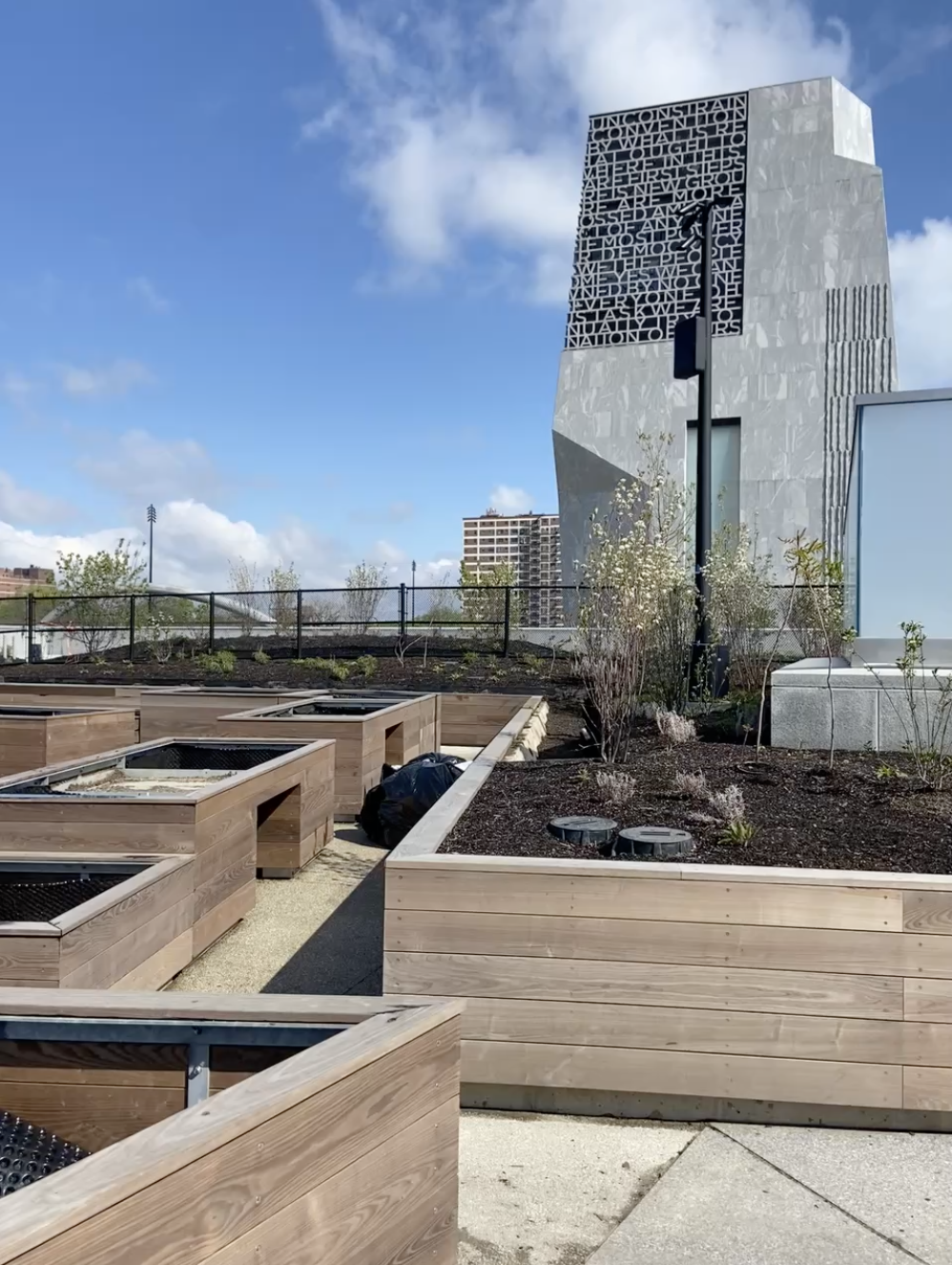
During the day, I also had time to sit down with a group of high school students and their mentors who participate in the Sisters in Cinema Podcasting for Beginners Workshop, supported through the Obama Foundation's Girls Opportunity Alliance, and watched them talk about their shows with the kind of clarity and confidence that makes you remember why any of this matters. They're already using podcasting to document their communities and shape their futures. The campus can now allow more young people like them to do that, too.
Meeting high school students and their mentors from Sisters in Cinema Podcasting for Beginners Workshop, supported through the Obama Foundation's Girls Opportunity Alliance.
On the Art, and What the Space Is Designed to Trigger
One of the things President Obama said that I keep coming back to:
"What we want to do is trigger ideas when people are here: feelings, connections that maybe they weren't seeing before."
The 28 commissioned artworks across campus are part of that. Carrie Mae Weems has an installation in the Sky Room, the free space with panoramic views across Chicago's South Side, and after completing the visual work, she commissioned four jazz musicians to write an original suite to accompany it. That music now plays as ambient sound across the entire floor. It wasn't in the original design brief. It came from one artist feeling something and collaborating across mediums. Two of the 28 works on campus are formal collaborations between artists, which, in a space that's asking communities to make things together, is the right kind of detail.
On cross-pollination, again, in President Obama's words:
"Our hope is that we've got people who are growing potatoes or tomatoes, and then you've got chefs who are interested in certain things, but also scientists thinking, 'I wonder if this gives me an idea about how I can teach my science classes better.' That kind of cross-pollination is one of the values of a space like this."
For podcasters and storytellers, that cross-pollination is your invitation. A conversation that starts in the garden might become an episode or provide you with the spark to create a whole podcast season. A session in the Media Suite might become a collaboration with someone you met at the library. The space is designed to make that happen.
What the Studio Is Really For
I got to record inside the Media Suite: a few videos, a micro-episode, and a conversation with Eddie Everette, who led the Obama Foundation's strategic execution of the space. It is genuinely a professional place to record and elevate story-telling, a real creative resource built for today's content landscape.
The Media Suite is currently only available to Presidential Center program participants. If you're local, sign up for the Foundation’s newsletter to learn more.
But the philosophy behind it goes deeper than access to a good microphone. When I asked President Obama what he hopes the studio makes possible, he said:
"The recording studio is an extension of a broader philosophy that everybody's voice counts, everybody has a sacred story, everybody has a perspective. You don't have to yell. You don't have to put people down. You don't have to say the most controversial thing that comes to mind even if you don't actually believe it. That's not the only way to get people to hear you or see you. You actually have something more valuable than that to offer - and there's an audience for that. But we have to have some trust and faith in that. And hopefully this becomes kind of an incubator for that mindset - of how do we talk to each other and listen to each other about the stories we got to tell. And find both the differences that we have to respect, but also more often than not, find common ground."
That's the ultimate purpose. And if you are part of underrepresented communities, multilingual creators, women who have been told their stories are too local, small, or too specific to find bigger ground, you know exactly what he's describing. The stories that feel most particular are often the ones that reach the furthest.
It’s Your Turn Now: Plan Your Visit
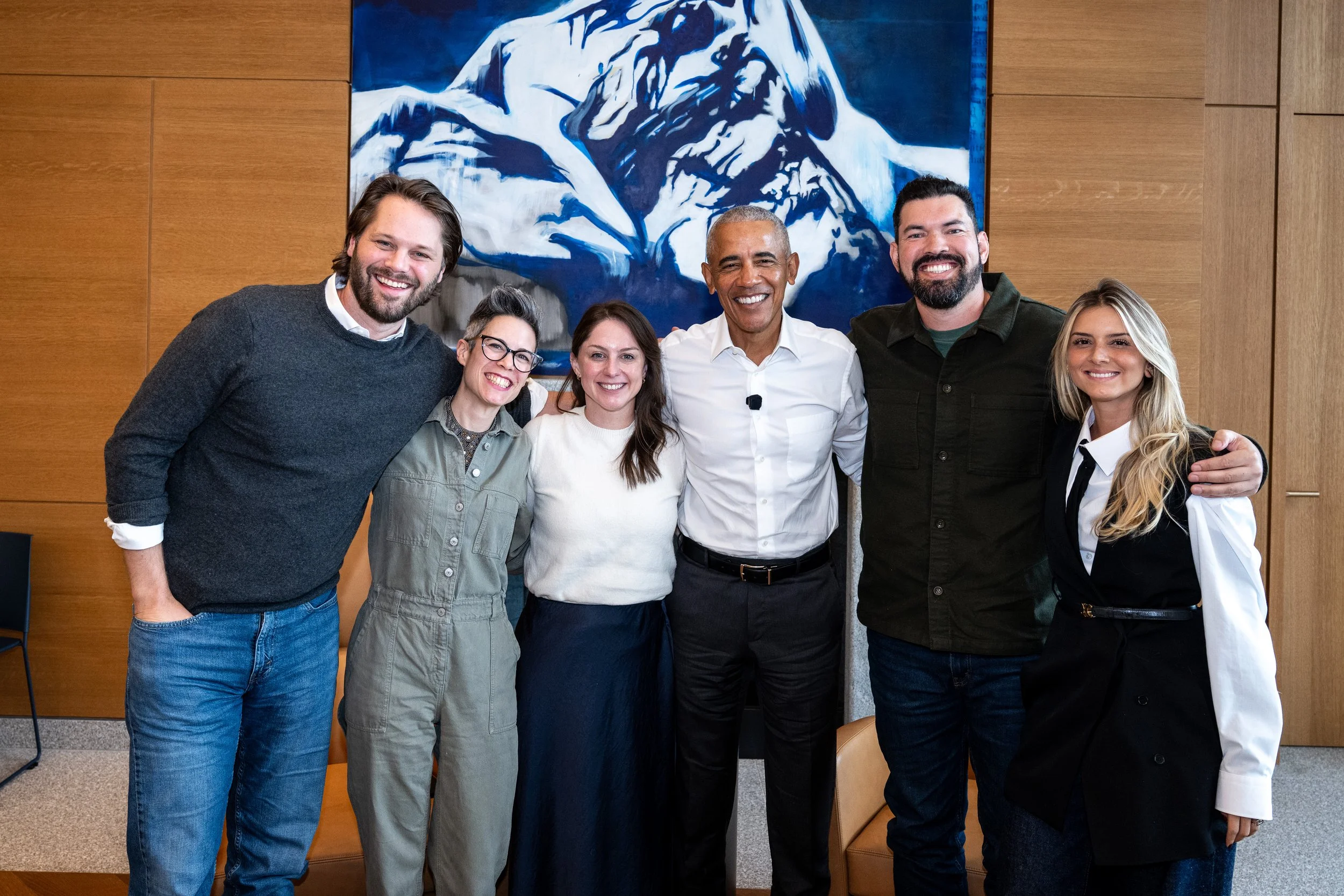
From left to right: Dave Jorgenson, Ana Xavier, Emily Glankler, President Obama, Kevin Espiritu, Amanda Ferber. Credit: Obama Foundation
The full campus opened June 19, 2026.
If you're making the trip, I recommend you don't rush it.
Walk the whole campus before you go into the Museum.
Sit in the garden. Talk to someone next to you.
Be ready to connect and be inspired.
The stories are already there.
This place just made it easier to capture them.
Visit Obama.org for more.
ABOUT THE AUTHOR
Hi, I’m Ana Xavier, a multilingual award-winning podcast marketing and content strategist specialized in generating online visibility for women, multilingual, and minority impact-driven business owners.
